If You Learn How to Do Something Drunk You Will Only Remember It When Drunk Again
Why do only some people go blackout drunkard?
(Prototype credit:
Getty Images
)
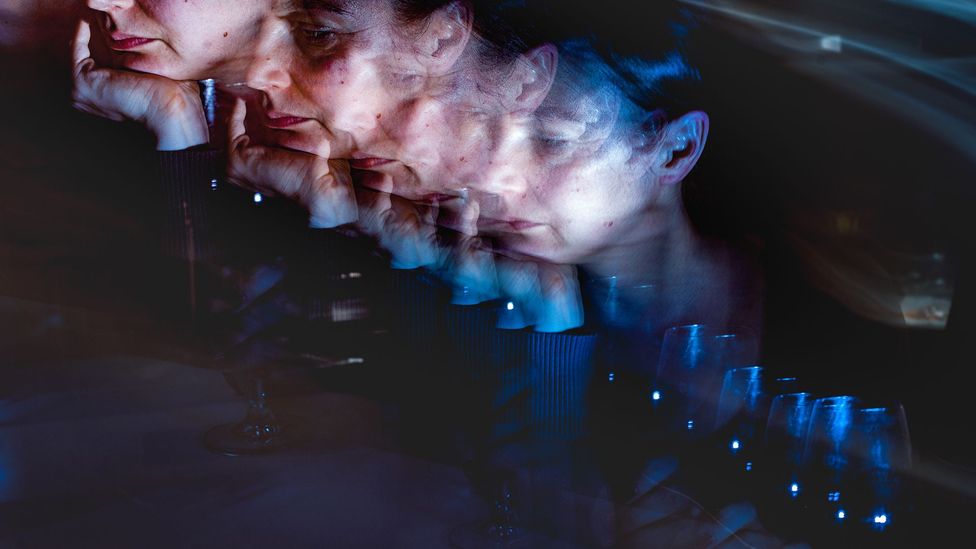
Even when drinking the same amount as others, only some people experience blackouts. But blacking out can predict other problems down the line.
T
This story is featured in BBC Future's "Best of 2018" collection. Discover more than of our picks.
It was another regrettably familiar wake-upwards for Sarah Hepola. Much of her memory from the previous night was blank. She remembers talking to people at a political party, but and then after that a shadow drops over her memories.
How did she become there, where was the postage on her mitt from? Who bought the pizza? Who was the human beside her?
"I was like, well that's weird, I don't know what happened… I just kind of laughed it off, it just seemed normal to me," she recalls.
This sort of retentivity loss happened fourth dimension and again to Hepola – and from a very early age. It oft felt like "a trap door had opened underneath me… I would wake up the next day and I would be in a different place," she says.
She was experiencing alcohol-fuelled blackouts – a colloquial term with potentially serious consequences. As the word suggests, in this country all memories of the night turn dark later a betoken. Some drinkers experience less severe, bitty blackouts where only pieces of memory are lost.
Hepola's regular blackouts didn't ring alert bells for her at the time. It was only looking back that she realised she had a "messed up" relationship with alcohol, experiences she has written about in a book.
You might also like:
• Beer or wine – which is better?
• Why do the British beverage and so much?
• Why are we and so scared of 'chemicals'?
If this blazon of amnesia after drinking alcohol sounds familiar, that's because blackouts are surprisingly common: ane assay suggests that over half of academy-aged drinkers have experienced some level of blackout when asked about their drinking habits, while a survey of more than two,000 adolescents recently out of secondary school found that 20% had experienced a coma in the previous six months.

Evidence suggests that blackouts among alcohol drinkers are very common, especially for university students (Credit: Getty Images)
"Fifteen years ago, the field didn't accept these were common phenomenon," says Aaron White of the National Institute on Alcohol Abuse and Alcoholism in the United states of america, who spends most of his career studying blackout drunkenness. "Now we are all aware that [many] people blackout."
Scientists are now revealing more almost why blackouts occur and why information technology affects some more than others – helping them to ameliorate understand and hopefully prevent the many negative consequences.
Until recent studies showed otherwise, for many decades it was believed that only alcoholics reached the state of being blackout drunkard. A bizarre serial of experiments – which never would be ethically approved today – revealed some startling insights.
In the late 1960s, a researcher chosen Donald Goodwin recruited alcoholics in hospitals and task centres to place what happens when a drunken retentivity disappears.
He found that out of 100 alcoholics, more than sixty experienced regular blackouts, some full and some fragmentary. He also revealed that individuals experiencing a coma can human action in a remarkably coherent manner. For instance, he showed that during intoxication subjects revealed "no impairment" of immediate retentivity and even were able to perform simple calculations. Simply xxx minutes later, these events were forgotten.
In follow-up experiments, he plied alcoholics with whiskey (up to 18oz – or half a litre – in four hours) and presented them with situations that were ready to "provide memorable experiences, which sober persons have no difficulty remembering".
In 1 he showed participants pornography, then asked detailed questions about what they had seen. In another, with a frying pan in paw, he asked individuals if they were hungry. When they answered, he told them that the pan had expressionless mice within. The drunkard subjects had forgotten these memories afterward 30 minutes and could all the same not think the events the following day. They could, though, recall these events up to two minutes later, revealing that their brusque-term memory was working.
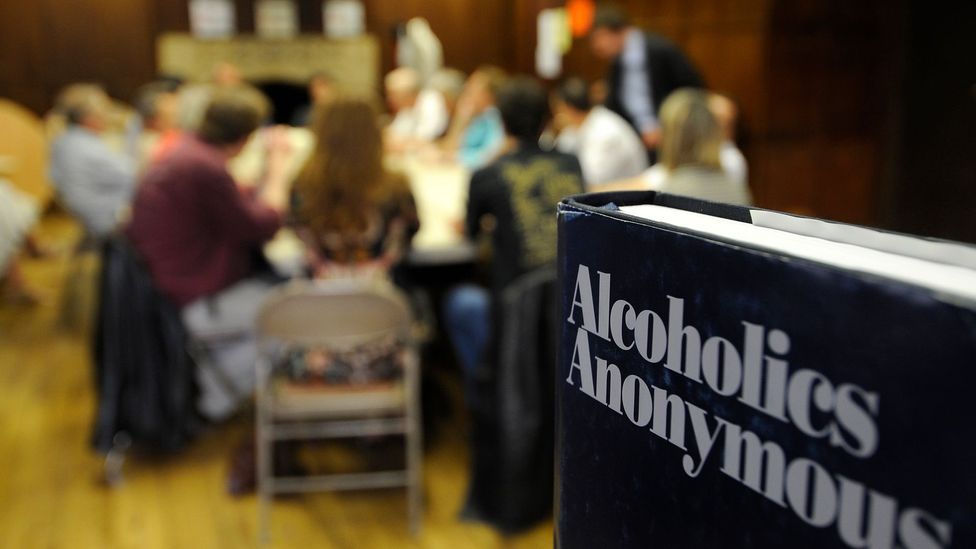
For many decades it was believed that merely alcoholics reached the state of existence coma drunkard, we now know that is not the case (Credit: Getty Images)
Though these experiments were performed with alcoholics, they set up the phase for understanding how even non-alcoholics human action during a blackout. They remain influential in role because today – for obvious ethical reasons – scientists cannot ply participants with alcohol to induce memory loss. They must largely rely largely on questionnaires of past events instead.
That chunks of retention are completely lost during a blackout goes some way into revealing what is going on in the brain. It's believed that the hippocampus is momentarily impaired – this is the structure of the brain important for weaving together incoming information to create our memories of everyday events. People with astringent impairment to this expanse cannot create new memories.
Booze therefore shuts off brain circuits central to making episodic memories (memories of specific times and places), explains White, who has studied the process on a cellular level with rodent brains.
"Nosotros recollect a big office of what'southward happening is that booze is suppressing the hippocampus, and it'south unable to create this running record of events," he says. "Information technology'southward like a temporary gap in the tape."
In rats, White showed that there are doses of alcohol where brain cells "still kind of work", and higher doses where they are completely off – which explains partial blackouts where just fragments are lost. At the same time, two other important brain areas that feed the hippocampus information nearly what's happening in the earth are as well suppressed when we drink alcohol, explains White. These are the frontal lobe, the reasoning area of the encephalon that nosotros employ when we're paying attending to something, and the amygdala, the area that warns u.s.a. nigh danger.
Run a risk factors
We at present also know more nigh other factors that influence blackouts, such equally drinking on an empty breadbasket or when sleep deprived. Some other major risk has to do with how fast alcohol is consumed, as the quicker we gulp the faster our claret alcohol level spikes. A blood alcohol level of between 0.20 to 0.30 percent seems to be able to induce a total blackout, where nix is remembered. That level could be reached past having 15 or more than standard Great britain drinks over four hours, depending on sex and body weight.
But blood alcohol levels do not explain why merely some people lose whole chunks of their memory while others who drink similar amounts don't. A 2016 written report led by Ralph Hingson, also of the National Constitute on Alcohol Abuse and Alcoholism, provided some answers.
Blackouts are more common among college students and women (Credit: Getty Images)
Women as well experience blackouts more than often. They are smaller on average than men and have a higher percent of body fat, which means their bodies have less water to dilute the booze they drink – so their blood alcohol level rises faster. In 2017, Amie Haas of Palo Alto University in California found that women would routinely blackout with iii fewer drinks than men. A 2015 study showed that women who consumed simply ane more beverage than their usual amount had a xiii% higher adventure of blacking out than men.
Aside from the sex differences, there could exist a genetic component to who is more than likely to coma. Individuals whose mothers had a history of booze problems were found to exist more than at risk. Another study, this fourth dimension on more than than one,000 pairs of twins, found that a genetic link accounted for half the blackouts experienced.
The genetic difference seems to play out in the brain, too. One longitudinal study of adolescents aged 12-21, led by Reagan Wetherill of the University of Pennsylvania, showed that sure individuals who later went on to abuse booze and experience blackouts, were less able to suppress their actions. This could be seen on brain scans, even before they were drinking alcohol.
"Across the lath at that place seems to be inherent encephalon vulnerabilities, and genetic vulnerabilities, that put a person at hazard," she says.
Alcohol can shut off brain circuits important for making memories of specific times and places (Credit: Getty Images)
Worse, studies on mice suggest that heavy drinking may even lead to boosted changes in the brain. Equally worrying is that the aforementioned people who are more prone to blackouts – teenagers and university students – are at a physically more than vulnerable age. "There'south growing evidence that particularly if yous are younger, it's really quite unsafe for a developing brain," says Haas. That'south because adolescents are more sensitive to the effects of alcohol compared to adults. One reason for this is that the frontal lobe of the brain is the terminal to develop, at around 25.
Consent wormhole
Similar the hazard factors, the consequences of blacking out are not only worse for adolescents, but also for women.
Haas and colleagues showed that women who experienced blackouts were more likely to engage in risky sexual behaviour while in a blackout state, compared to men and to drinkers who didn't blackout at all. These women also showed more regret the following day.
Evidence also shows that women with a history of sexual attack are more likely to be re-victimised if they are in an alcohol-induced blackout – compared to binge-drinkers who didn't coma. This is considering they are risk while they under the influence due to dumb decision making, especially when it comes to assessing potentially dangerous situations, only they are as well at hazard afterwards considering they cannot rely on their retentivity of what happened.
This means at that place is a catch-22. Those experiencing blackouts may exist more vulnerable to potential perpetrators in the moment. Merely if they endeavour to press charges after, they too are vulnerable to having their cases dismissed.
That is true fifty-fifty in places with an "affirmative consent" standard, where unless someone has indicated their willingness, it's attack. "If it'southward 'he said/she said', you have to rely on a preponderance of show to determine whether or non consent was given," says Wetherill.
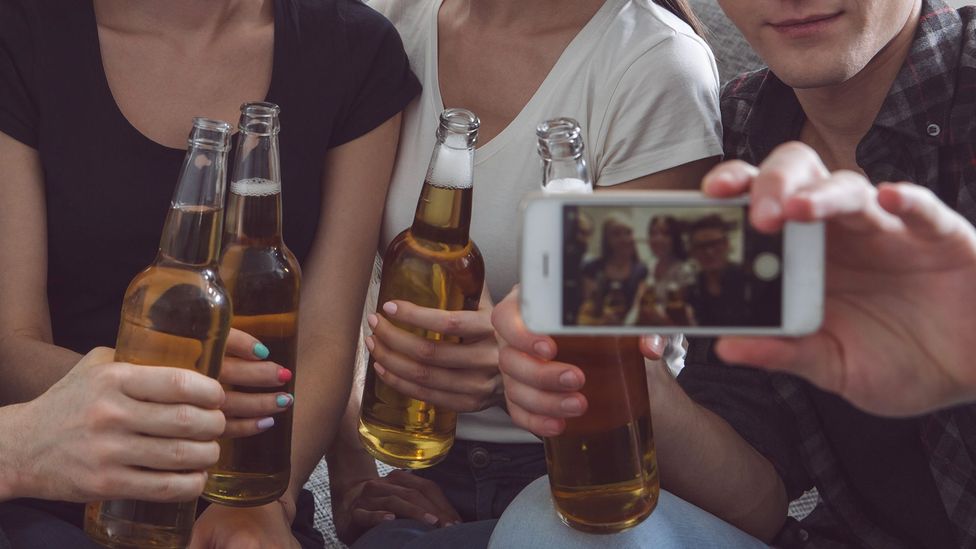
Individuals with a history of sexual assault are more than likely to be re-victimised if they are in an alcohol-induced blackout (Credit: Getty Images)
In the U.s.a., meanwhile, laws vary past land. Most say that someone who is "mentally incapacitated" cannot requite consent. But New York, for example, says mental incapacitation tin can legally result just from involuntarily existence given a drink or drug, non from having chosen to beverage.
States that include voluntary drinking, on the other hand, ordinarily include the caveat that the accused must 'reasonably' have realised the person was incapacitated. But since people who accept blacked out can seem highly functioning, the accused can argue that they didn't realise.
"It's tricky because people can blackout and look quite sober," says White. "Yous don't always have to [appear] severely intoxicated to blackout."
Sarah Hepola has aplenty feel of this kind of disconnect. She says that, during her blackouts, she could nonetheless role, accept part in conversations and reply to jokes, in the same way that Goodwin's subjects could perform calculations. Merely those who knew her well could recognise her "glassy-eyed unplugged" await of being in a blackout country. "It was like nobody was dwelling house… like I was talking but wasn't receiving," she says.
Simply despite how she may have looked to outsiders, she knows she wasn't herself. "I definitely remember my decisions were impaired," Hepola says. "I was highly impulsive, wildly unguarded and boastful, even sexually aggressive at times in ways that didn't make sense to me the next twenty-four hours… based on what people told me."
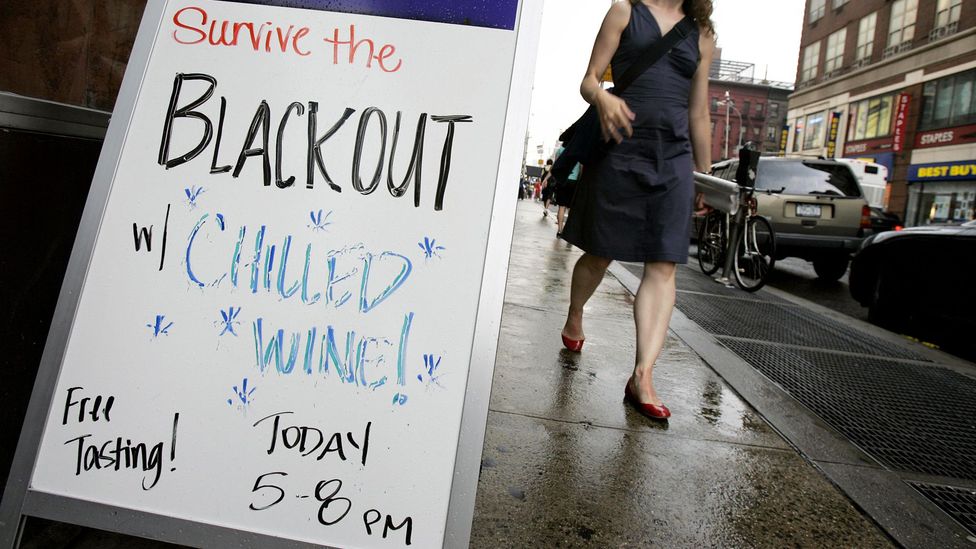
In celebrated studies, scientists plied participants with alcohol to induce retention loss. This cannot be washed today for obvious upstanding reasons (Credit: Getty Images)
This is why some university policies spell it out more clearly: "An private may feel a blackout country in which they appear to exist giving consent just does not really accept conscious awareness or the power to consent," Amherst College warns in its sexual misconduct policy. Similarly Michigan Academy states: "A person who is intoxicated is legally unable to give consent to sexual activity, meaning that sexual intimacy with someone who is 'mentally incapacitated' meets the legal definition of a sexual assault."
Information technology'south perhaps therefore not surprising that a person who regularly experiences blackouts is as well more than likely to experience other negative consequences of drinking, from the more mundane (like missing appointments or coming to work late) to the more than serious (like having an injury or overdosing from using illegal substances). This makes blackouts a useful marking and predictor of other detrimental behaviour.
For these reasons, questions about alcoholic blackouts are now increasingly beingness used in screening tools to quickly become at whether someone is a recreational drinker or a trouble drinker.
Blackout screening
Mary-Beth Miller, an addiction psychologist at the University of Missouri, found that a unproblematic intervention technique could help blackout drinkers reduce their drinking, a finding she first showed in ex-ground forces veterans and then extended to university drinkers.
The intervention is chosen "personalised normative feedback". It is an online questionnaire that asks individuals most their drinking habits, and reports back how much they are drinking compared to others who are similar in age and background. Blackouts, her team found, serve as a "teachable moment after which individuals are more probable to respond to intervention".
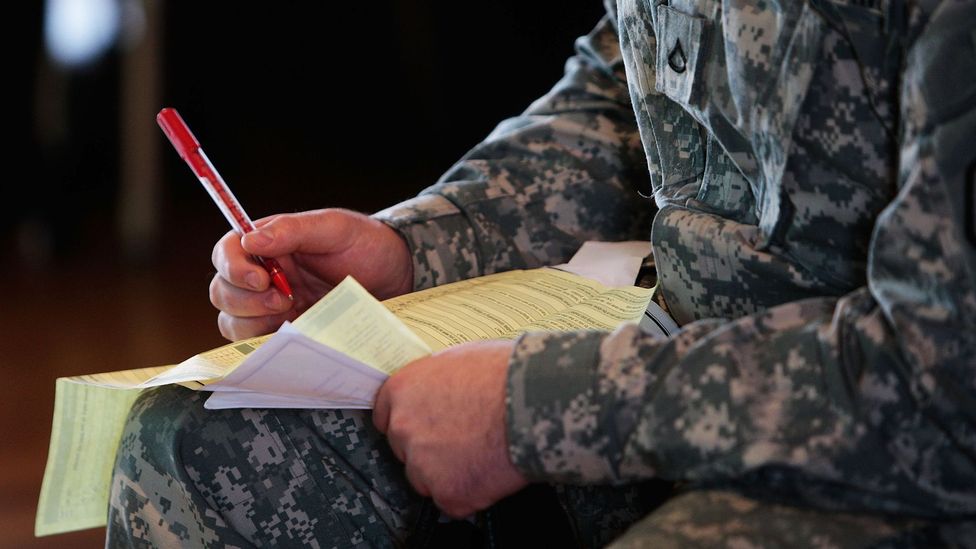
An online questionnaire that feeds back how a person's drinking habits compares to others, could help reduce alcohol consumption (Credit: Getty Images)
Screening questionnaires nearly booze use now routinely inquire most prior blackout experiences, which could make information technology easier to target and observe individuals who need aid. Simply asking about the amount an individual has drunk was not found to be effective. "If yous are screening specifically for blackouts, information technology makes your screening more specific, instead of trying to intervene with every person who comes into your clinic," Miller says.
These interventions are not fourth dimension-consuming or expensive, making Miller hopeful that she and colleagues can build upon them to develop even more constructive interventions. She hopes to encourage a drinking culture where people empathize that "you don't have to go completely wasted to have a good fourth dimension."
Other researchers hope that asking about previous blackouts will in turn help reduce other types of risky behaviour. "It'due south definitely interesting that a blackout is one of the virtually negative consequences of alcohol, and it might exist a canary in the coalmine for more pregnant problems," Haas says.
For those who experience regular blackouts, a skilful first pace is to better monitor your own alcohol intake and ask friends around y'all to do the same. That'southward easier said than done. For Hepola, it is but looking back that she could meet the alarm signs. Even at the time she knew she "didn't desire to be that drunk" – but yet couldn't stop drinking.
"Some messed-up behaviours get laughed off and normalised and sometimes we get distanced from the emotional and physical damage it [booze] causes," says Hepola.
She has at present been sober for eight years and is glad to no longer fall into the blackness trapdoors of memory loss. It has fabricated her life a lot simpler, she says.
---
Melissa Hogenboom is a senior announcer at BBC Hereafter. You can follow her on twitter or facebook.
Join 800,000+ Future fans past liking us on Facebook , or follow us on Twitter .
If you liked this story, sign up for the weekly bbc.com features newsletter , called "If You Simply Read vi Things This Calendar week". A handpicked pick of stories from BBC Future, Globe, Culture, Capital, and Travel, delivered to your inbox every Friday.
mclaughlintherver.blogspot.com
Source: https://www.bbc.com/future/article/20180613-why-do-only-some-people-get-blackout-drunk
0 Response to "If You Learn How to Do Something Drunk You Will Only Remember It When Drunk Again"
Post a Comment